







FAQs
If you can’t find what you’re looking for in our solar PV, heating or insulation pages, check out our frequently asked questions below.
If you still can’t find what you’re looking for, feel free to call us on 0333 003 0703 or drop us a line at sales@effectivehome.co.uk and we’ll do our best to help.
Solar
Buying a solar system
What will my home's solar energy system cost?
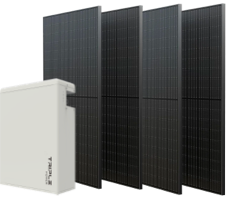
Going solar is an investment in a brighter tomorrow. It’s cleaner, greener and more affordable way to source your energy, become less reliant on the Grid and even make money by trading your surplus energy. Your solar solution will be bespoke to your home. It could cost from £4,995 for solar PV panels alone and from £8,495 for solar PV compete with the Social Energy smart battery (based on a typical 3-bed house); the exact price depends on your roof size, how many solar panels you need and whether you wish to add a smart battery to store/sell your energy.
Simply book your free home survey with one of our solar energy experts. We can also discuss finance options on the day (subject to status).
Using a Solar System
Is solar energy worth the investment?
Sunlight is free – so once you’ve paid for the solar panel installation, you save money on your energy bills – and can even sell your surplus energy and battery capacity to the Grid.
How much could solar energy save me?
By generating and using your own solar energy – instead of power from the National Grid – you can make significant savings on your electricity bills. The Energy Saving Trust calculator estimates that a typical 4kWp solar panel system can knock between £500-£700 off your annual bill with the Smart Export Guarantee SEG depending on where you live.
Using battery storage alongside your solar panels can further increase your savings – because a battery will store the surplus energy that you produce, so you can use it when the sun goes down instead of drawing it from the Grid.
*Example of annual savings based in Manchester with SEG (Sept 2020): https://energysavingtrust.org.uk/renewable-energy/electricity/solar-panels
Who will switching to solar reduce my carbon footprint
You could cut 100 tonnes of carbon.
Imagine you’re on a return flight from London to New York. You’ve just generated 986kg CO2 – per passenger, not the whole plane. Think about how much carbon the aircraft you’re in is emitting into the atmosphere. Now times that by 100. That’s how much carbon you can cut by simply using solar energy over a 30-year period.
100 tonnes of carbon wiped clean off your carbon footprint and out of our planet’s atmosphere. Surprised? That’s the power of solar.
- The average UK household produces 8.1 tonnes of CO2 a year
- 40% of the UK’s carbon emissions come from households
- Half of your home’s carbon footprint is made of the energy you use
Why do I need a battery?
It’s a beautiful, sunny day. Your solar panels are soaking up all that daylight enabling you to power your home. But then, the sun goes down – no more solar energy is being generated, but you still need to power your lights in the evening. What happens then?
Well, if you didn’t have a battery, you’d then switch to using power from the National Grid – costing you money. But with a battery installed in your home, you can use all the extra solar energy captured during the day that you didn’t use.
So you can keep the energy you’ve generated and use it exactly when you need it most – instead of it going to waste.
How long do smart batteries last?
We supply a number of different batteries. They come with a 10-year warranty – their lifespan far exceeds that of standard batteries you use on gadgets at home.
Solar thermal for your home
How much does a solar heating system cost?
Prices start from £7,495 inclusive of VAT.
Will it work?
Solar hot water panels will work for most homes in the UK. The facing, pitch angle and size of your roof area will determine which solar thermal system is the best for your home, it will also contribute to how much energy you’ll capture.
How much money can I save?
Based on the results of a field trial conducted by The Energy Saving Trust across a range of household and system sizes, these are the typical savings from a well-insulated and properly used system. Savings will vary from user to user.
Annual Savings
- Gas £60
- Oil £65
- Coal £70
- Electricity £70
- LPG £100
Annual CO2 savings (kg/year)
- Gas 295kg
- Oil 410kg
- Coal 660kg
- Electricity 205kg
- LPG 340kg
Is there any financial support for generating my own renewable energy?
You may be eligible to receive payments for the heat you generate from a solar water heating system through the UK Government’s Renewable Heat Incentive (RHI).
- 2 person household £215 – based on a 2m2 system
- 3 person household £295 – based on a 3m2 system
- 4 person household £375 – based on a 4m2 system
- 5 person household £450 – based on a 6m2 system
- 6 person household £525 – based on a 6m2 system
Do you need planning permission for solar panels
You don’t need planning permission for most domestic solar thermal systems in the UK, as long as they aren’t too big. But exceptions apply for listed buildings, buildings in conservation areas and World Heritage Sites. If this applies to you, contact your council to see whether you need to apply for planning permission for your solar panels. Read more in our in-depth guide.
I don't have a south facing house, will solar panels work for my home?
For optimum performance solar panels should be positioned South facing, however, not all roof orientations may allow this. In general, any position between South East & South West is suitable and will only reduce the optimum by up to 5%.
Solar thermal panels can also be mounted on an East & West elevation; this type of system will absorb energy both in the morning and in the afternoon as the axis of the sun or diffuse light moves from East to West.
Is there an ideal roof pitch for solar panels?
The ideal pitch angle is between 30-40° which is the standard pitch of most roofs in the UK.
What's the difference between solar thermal and photovoltaic?
Solar PV is based on the photovoltaic effect, by which a photon (the basic unit of light) impacting a surface made of a special material generates the release of an electron.
Solar thermal, on the other hand, uses sunlight to heat a fluid (depending on the particular application, it can be water or other fluid).
Home insulation
Can newer homes benefit from extra insulation?
Many older properties have less insulation than modern houses built today, but even adding insulation to a newer home can pay for itself within a few years, such as topping up loft insulation or underfloor insulation.
What qualifications do Effective Home installers have?
Could I be entitled to FREE home insulation?
The ECO scheme provides grants for loft, cavity wall and underfloor insulation to help reduce carbon emissions and keep heating bills down.
How it works
1 Effective Home carry out a check to see if you are eligible for ECO funding
2 We arrange a free home survey to ensure your property meets the criteria
3 An installation date for your home insulation, when it suits you
If you are eligible for ECO funding or other grants, your home insulation could be heavily discounted, maybe even free. Get in touch on 0333 003 0703 and we can help, or check if you qualify here.
Loft insulation
Can all lofts be insulated?
If your loft is easy to access and has no damp or condensation problems, we should be able to insulate it.
What will you do on installation day?
If access is easy and your loft joists are regular, we will install rolls of mineral wool insulation. The first layer is laid between the joists – the horizontal beams that make up the floor of the loft – then another layer is laid at right angles to cover the joists and make the insulation up to the required depth.
Any tanks and pipes that are in the loft would be insulated as part of the install to prevent them from potentially freezing in the future. Also, as part of the installation process, we need to ensure your loft is adequately ventilated. In some cases we might need to add some roof or tile vents and in others where the loft space is already adequately ventilated we would not need to make any adjustments.
What about inaccessible lofts?
If we can’t get into your loft to insulate it with rolls of mineral wool, ‘blown insulation’ may be an option. This requires specialist equipment to blow appropriate insulation material into any awkward space. They may use mineral wool fibre, treated cellulose or polyurethane foam.
How much does loft insulation cost?
The cost of loft insulation for a typical 3-bed house starts is around £350. Your price depends on any insulation you already have and your home’s specific installation requirements. You could also be entitled to free loft insulation through the ECO Scheme – we can help you with this, as well as getting you a quote.
Cavity wall insulation
Is cavity wall insulation right for my home?
If your house was built in the last 20 years or so, the walls are probably already insulated. If you’re not sure whether a) your walls have cavities, or b) if you have cavity wall insulation already, we can help.
If your house was built after the 1920s, it is likely to have cavity walls. A cavity wall is made up of two walls with a gap in between, known as the cavity; the outer leaf is usually made of brick, and the inner layer of brick or concrete block.
Pre-1920 older houses are more likely to have solid walls. A solid wall has no cavity; each wall is a single solid wall, usually made of brick or stone.
How does cavity wall insulation get inside the wall?
Most cavity walls can be insulated by injecting insulation material into the cavity from the outside. Your installer will drill small 22mm drill holes at intervals in your outer walls, inject insulation through the holes using specialist equipment, and then seal them with cement. The insulation materials are usually either mineral wool or polystyrene beads, but polyurethane foam may sometimes be used instead.
Once all the insulation is in, we’ll fill the holes in the brickwork so you’ll barely notice them.
How long does it take to insulate cavity walls?
Filling cavity walls is not a job you can do yourself, you will need to employ a registered installer. Effective Home can do the job in around two hours for an average house with easily accessible walls. It shouldn’t make any mess.
How much does cavity wall insulation cost?
The cost of cavity wall insulation depends on the size of your property and the walls to be insulated. As a general rule of thumb, installation prices for a typical 3-bed house start at £680 – solid wall costs may be higher, whereas bungalows tend to cost less due to their height. You could also be entitled to free cavity wall insulation through the ECO Scheme – we can help you with this, as well as getting you a quote.
Grants
ECO Scheme funding
Can I get a free boiler through ECO?
The ECO Scheme is a Government initiative – often called the ‘replacement boiler scheme’ or ‘ECO boiler scheme’ – designed to help low income households save money on their heating bills. One way it does this is by providing gas boiler grants to replace faulty and inefficient boilers with more energy efficient ones.
How much are the ECO grants worth?
They vary by your situation, property type and what the grant is for. For example, an ECO boiler grant could entitle you to a free A-rated gas boiler or you may be asked to pay a contribution. First time central heating grants that are 100% funded could save up to £4,500 on a new, efficient central heating system if you’ve never had one in your home.
Loft insulation, cavity wall and underfloor insulation grants also vary house by house. Firstly, check if you qualify – it only takes 2 minutes – and if you’re not sure, get in touch. We know ECO funding inside out and will do our best to help you get the money you need.
What benefits would qualify me for ECO funding?
- Armed Forces Independence Payment
- Attendance Allowance
- Carer’s Allowance
- Child Benefit*
- Child Tax Credit
- Constant Attendance Allowance
- Disability Living Allowance
- Income Support
- Pension Credit (Guarantee)
- Employment and support allowance (income-related)
- Jobseeker’s allowance (Income-based)
- Income Support
- Industrial injuries disablement benefit
- Mobility supplement
- Personal independence payment
- Severe disablement allowance
- Universal credit
- War Pension Mobility Supplement
- Working tax credit
If you receive one of these qualifying benefits (excluding Child Benefit) you will be eligible regardless of household income, so no means-testing is required for applications.
If Child Benefit is the only qualifying benefit you receive, you will also need to ensure your annual household income does not exceed the amount set out in the table below, corresponding to the type of claim and the number of qualifying children.
| Number of children or qualifying young persons for which the person is responsible | ||||
| Type of claim | 1 | 2 | 3 | 4 or more |
| Single claim | < £18,500 | < £23,000 | < £27,500 | < £32,000 |
| Member of a couple | < £25,500 | < £30,000 | < £34,500 | < £39,000 |
Why apply for ECO funding through Effective Home?
We know that upgrading your home to save energy and lower your carbon footprint is a big investment. Depending on your circumstances and home, we may be able to help get a new boiler, central heating or home insulation installed for free or part-funded through the ECO Scheme.
If you qualify for ECO funding because you are on a low income or benefits, we can help make the whole process easier. We’ve been helping homeowners and landlords for over 10 years through:
- Money towards a new energy efficient ‘A’ rated boiler
- Lower everyday energy usage and bills
- Cosier and more comfortable homes
- Work carried out by qualified, professional installers
- Expertise in ECO Scheme funding
About us
Why choose Effective Home?
Whether you are looking to upgrade your home or lower your carbon footprint, we can help. From making your first steps to sustainable living to the big leap to renewables, our teams are highly qualified with the expertise to making your journey effortless from day one. We’re a small company with a big heart – covering a huge area of the country – so you get a personal service with ‘bulk buy’ value. For peace of mind, our accreditations speak for themselves.
What accreditations do you have?
We are proud to be certified and approved by industry leading assessors, registration bodies and consumer watchdogs, including NICEIC, OFTEC, and Gas Safe. You can see them all here.
What guarantees do you offer?
Knowing we’re quality assured with these accreditations is reassuring for our customers. It gives you peace of mind that you’ve made the right choice in Effective Home. Every product and service we sell comes with its own guarantee – some up to 25 years – and an aftersales support service that is second to none.
Do you offer finance?
Effective Home offers a choice of ways to pay for any upgrades to your home, including finance. Not everyone has the money set aside to pay for investments in renewable energy or ways to make their home more efficient. You’ll find details on our boiler, heating, home insulation and solar product pages – along with any relevant funding that may be available to reduce your costs, such as ECO Scheme or the Government’s Green Homes Grants.
What areas do you cover?
You can see the areas we cover for heating, home insulation and solar energy solution here.
Where are you based?
Our main HQ is in South Yorkshire – Unit 3, Crompton Business Park, Crompton Road, Doncaster DN2 4PA. We also have teams of engineers and installers based throughout the country from Newcastle down to Worcestershire.
Are you hiring?
You can see our latest vacancies here. If you feel you have the experience and energy required to drive Effective Home’s business forward, please email your CV to David Wright.
How are you working during COVID-19?
Rest assured, Effective Home is following current Government guidelines and updating our working procedures to comply with current Covid-19 recommendations and as they change. All of our team – including surveyors, engineers and installers – are mindful of the 2m distance rule, carry hand sanitiser and are equipped with the correct safety gear for home visits.
When you book a survey, repair or appointment we’ll ask you if:
- You or anyone in your home has been diagnosed with Coronavirus (Covid-19)
- You or anyone in your home has been advised to self-isolate
- Anyone in your home is at higher risk – either through existing health conditions or over 70 years old
If you answer ‘yes’ to any of these questions, we’ll work with you to assess your need for a home visit agreeing next steps with you.
We’ll prioritise emergencies and we may need to postpone non-urgent visits, like annual services, to a later date.
Before your home visit
On the day of your appointment, we will also call you and ask the same set of questions – this is important just in case anything has changed since you booked.
When anyone from Effective Home visits your home
- Hand washing will take place before, during and after their visit
- You won’t be asked to sign anything
Our engineers will be social distancing, so please keep a 2m radius of their work area at all times. Any Covid-19 questions? Call us on 0333 003 0703